


If you’re trying to sell a rental in Miami-Dade or Broward right now, you’re probably dealing with more than one problem at once. The tenant is still in place. Insurance and carrying costs are squeezing the property. The HOA may have its own approval rules, access restrictions, or leasing documents. And you need to decide whether to wait, list, negotiate a move-out, or take a direct exit.
Selling a house with tenants isn’t just a marketing issue. It’s a lease issue, a notice issue, a showing issue, and often a valuation issue. In South Florida, the landlords who get through this cleanly are the ones who treat the sale like a controlled legal process from day one.
Table of Contents
- Selling Your Tenanted Florida Property At-a-Glance
- Your Legal Blueprint Lease Audits and Florida Tenant Rights
- Comparing Your Three Selling Strategies
- Executing the Sale Notices Showings and Negotiations
- The Cash Buyer Path Bypassing Tenant and Property Hurdles
- Finalizing the Sale Closing Logistics with a Tenant
- Florida Landlord FAQs
Selling Your Tenanted Florida Property At-a-Glance
At-a-Glance
- Your lease controls the first move: A fixed-term lease, month-to-month arrangement, renewal clause, or tenant purchase right changes what you can do next.
- Florida notice rules matter immediately: Entry for showings requires reasonable notice. In practice, Miami-Dade and Broward landlords should give at least a full day whenever possible to avoid conflict.
- Your buyer pool depends on occupancy: A vacant home can appeal to owner-occupants and investors. An occupied one usually narrows toward investor buyers.
- Tenant cooperation affects the entire sale: Cleanliness, access, inspection scheduling, and buyer perception all turn on whether the tenant is helping or resisting.
- You have three real options: Wait and sell vacant, sell the property occupied to an investor, or skip the listing path and sell directly for cash.
A common 2026 South Florida scenario looks like this. A landlord owns a condo in Broward or a single-family rental in Miami-Dade. The tenant is paying, but not always smoothly. The building management wants advance notice for access. The insurer has raised costs again. The owner wants out, but the lease still has time left and nobody wants a drawn-out fight.
That situation calls for a technical decision, not guesswork. Some owners should let the lease run and list vacant. Some should package the property as a turnkey rental for an investor. Some should bypass showings and financing risk altogether. The right answer depends on lease terms, tenant behavior, property condition, and how much certainty you need.
Your Legal Blueprint Lease Audits and Florida Tenant Rights
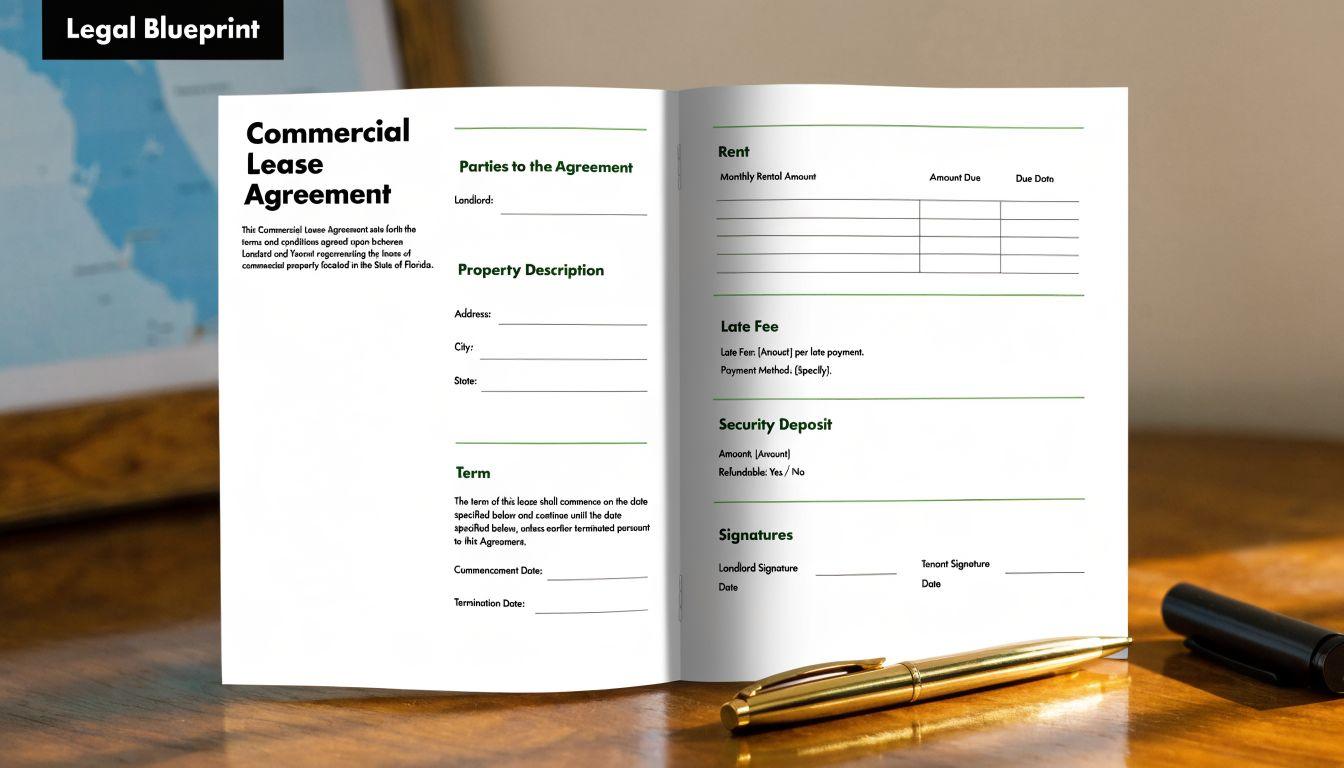
Before anyone talks about price, photos, or listing strategy, pull the entire lease file. That includes the signed lease, addenda, renewals, notices, payment ledger, security deposit record, and any HOA or condo rider the tenant signed. Selling a house with tenants starts with document control.
Start with the lease file
Read the lease as if you’re buying the property yourself. You need to know exactly what a buyer would inherit.
Focus on these items first:
- Lease term: Is it fixed-term or month-to-month. A fixed-term tenant usually stays through the lease unless a valid early termination right exists.
- Sale-related language: Some leases say the owner may market or show the property under specific conditions. Others are silent, which means you lean on Florida landlord-tenant law and the entry terms already in the lease.
- Renewal provisions: Automatic renewals and notice deadlines can extend your timeline unnoticed if you miss them.
- Purchase rights: If the tenant has a right of first refusal or other purchase option, handle that before you market the property.
- Default history: A buyer will want to understand whether the tenant has been stable, difficult, or inconsistent.
If your tenant relationship is already strained, review practical remedies early. This guide on dealing with problem tenants before a sale is useful because sales fail when owners wait too long to address access, cleanliness, or repeated lease violations.
Practical rule: If a document affects possession, rent, deposits, access, or renewal, assume the buyer, title company, and tenant may all ask for it.
For a broader statutory refresher, VerticalRent has an essential Florida landlord guide for owners that helps frame the baseline rules before you start serving notices.
Entry rights and showing notices in Florida
Florida law gives landlords a right of access, but not unlimited access. That distinction matters. In a sale, owners get into trouble when they act like ownership alone lets them schedule entry whenever it’s convenient.
In Florida, improper notice for entry or showings can expose the landlord to tenant claims. Landlords must provide reasonable notice, which is legally interpreted as at least 12 hours prior to entry under Florida Statute 83.53, and 24 hours is the accepted best practice in Miami-Dade and Broward to reduce disputes. Failure to comply can create litigation exposure of 15-25% of the potential sale profit, as noted in this analysis of selling a house with tenants in 5 steps.
That doesn’t mean every tenant will cooperate just because notice was technically valid. It means your legal footing improves when you act conservatively, document every notice, and avoid surprise entries.
Miami-Dade and Broward practical compliance
In condo-heavy parts of Miami-Dade and Broward, another layer applies. Building associations often require guest registration, elevator reservations, access windows, or broker check-in procedures. Those rules don’t override tenant rights. They add one more coordination point that can derail a showing if you plan badly.
Use a simple operational system:
- Send written notice first. Email and text can help with speed, but keep a formal written record.
- Offer narrow showing blocks. Tenants respond better when they can plan around fixed windows.
- Confirm building access rules. Don’t let a buyer or inspector get turned away by security.
- Log every entry. Keep dates, times, and names. If a dispute starts, your records matter.
The legal foundation is simple. A sale doesn’t erase the tenant’s right to quiet enjoyment. Owners who respect that right usually preserve an advantage. Owners who ignore it often create a delay they could have avoided.
Comparing Your Three Selling Strategies
Landlords usually debate the wrong question. They ask, “Can I sell with the tenant in place?” The better question is, “Which selling path gives me the best trade-off between price, time, effort, and risk?”
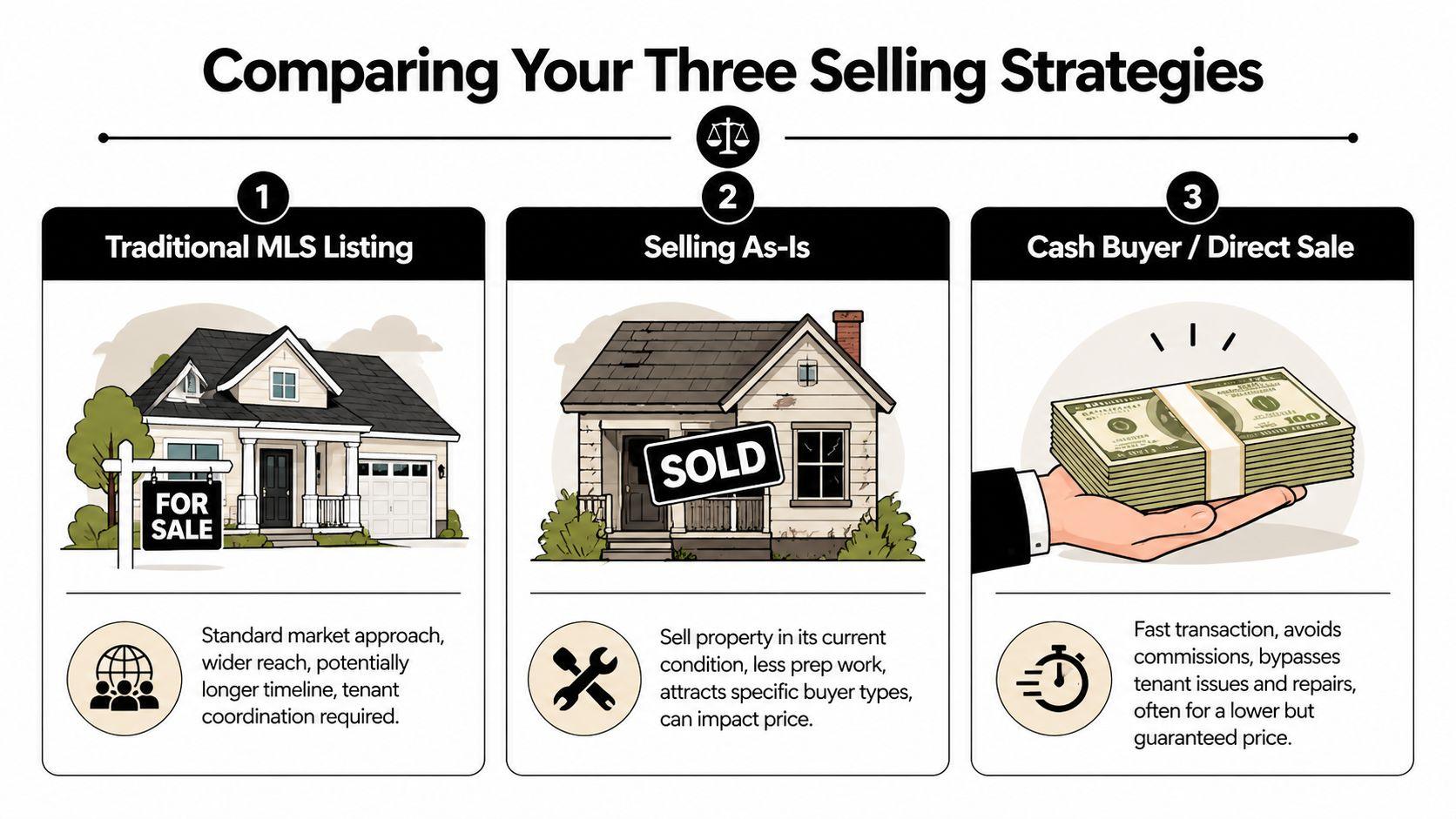
Comparing 3 Ways to Sell a Tenant-Occupied Property in Florida
| Metric | Traditional MLS Listing (Vacant) | Selling Turnkey (Tenant-Occupied) | Direct Cash Offer (e.g., Property Nation) |
|---|---|---|---|
| Primary buyer type | Owner-occupants and investors | Mostly investors | Direct investor buyer |
| Price dynamics | Usually strongest market exposure if property is clean and vacant | Tenant-occupied homes typically sell at a 10-20% lower sale price than comparable vacant homes because the buyer pool narrows and buyers price in lease risk, according to this tenant-occupied property analysis | Price is negotiated around speed, certainty, condition, and occupancy |
| Showing burden | Highest prep burden, but easiest scheduling once vacant | Hardest coordination because tenant access controls the calendar | Usually minimal or no repeated retail showings |
| Financing friction | Standard buyer financing path | More scrutiny on lease file, tenant condition, and rent history | No lender underwriting tied to tenant file |
| Seller workload | Highest if repairs, cleaning, staging, and vacancy turnover are needed | Moderate to high because you manage tenant coordination while marketing | Lower operational burden |
| Best fit | Owners who can wait, vacate, and prepare the home | Owners with a stable tenant and investor-friendly property | Owners who need speed, privacy, or a clean exit from a messy situation |
A vacant MLS listing usually wins when the unit shows well, the tenant is already leaving, and the property appeals to owner-occupants. A tenant-occupied investor sale works better when the rent is marketable, the lease file is clean, and the tenant is cooperative. A direct cash sale works when certainty matters more than squeezing the last possible retail dollar from the property.
What works and what usually backfires
The biggest mistake is mixing strategies. Owners try to market the property like a retail sale while keeping an uncooperative tenant in place. That creates a weak hybrid. You get investor-level pricing pressure with owner-occupant-level showing expectations.
What usually works instead:
- Vacate first, then list retail: Best when timing allows and the property will benefit from repairs, paint, cleaning, and unrestricted access.
- Package it as an investment asset: Best when the tenant is stable and your documents are organized. Buyers want a clean lease, payment record, and clear handoff terms.
- Sell directly and skip the market process: Best when the property has friction, such as access problems, unresolved condition issues, or a tenant situation that will scare financed buyers.
Buyers don’t discount occupied rentals because they dislike leases. They discount uncertainty.
A lot of owners also underestimate the process cost of “trying MLS first.” Time has a price. So do insurance premiums, taxes, HOA dues, maintenance calls, and failed showings. If you’re still weighing whether to list, self-manage, or choose another route, this breakdown of selling by owner vs listing with a Realtor helps frame the decision from the seller’s side.
In Miami-Dade and Broward, condos add another layer to the strategy choice. Investor buyers will examine rental restrictions, association financials, pending special assessments, and tenant approval rules. If those records are messy, the turnkey investor path gets harder. In that case, waiting for vacancy or choosing a direct sale may be the cleaner move.
Executing the Sale Notices Showings and Negotiations
Once you’ve picked the path, execution matters more than theory. Tenant communication has to be calm, clear, and documented. Most occupied sales break down because the owner creates uncertainty, not because the tenant started out hostile.
Notify the tenant like a professional
Start with a written notice of intent to sell. Keep it direct and non-threatening. The goal is to remove fear and set expectations.
A practical opening looks like this:
The property will be offered for sale. Your lease remains in effect unless we reach a separate written agreement. We will coordinate any lawful entry with advance notice and will work to minimize disruption to your schedule.
That language does three things. It confirms the sale. It reassures the tenant that the lease isn’t being ignored. It signals that access will be handled professionally.
Then move quickly into logistics:
- Explain the process: Tell the tenant whether you’re planning investor showings, inspections, appraisals, or a direct buyer visit.
- State the notice method: Confirm whether notices will be delivered by email, text, posted notice, or another permitted method.
- Give a contact channel: One person should manage all showing communication. Multiple voices create confusion.
Use controlled showing windows
Don’t schedule one-off showings all week. That approach burns tenant goodwill fast. Use grouped showing windows instead.
A better structure is a limited set of pre-approved blocks. That gives the tenant predictability and gives buyers a fair chance to view the property. In occupied condo buildings, coordinated blocks also help with front desk, parking, elevator access, and lockbox limits.
What usually backfires:
- surprise showing requests
- agents contacting the tenant directly without instruction
- open-ended availability
- repeated cancellations after the tenant has already prepared the unit
This walkthrough is worth watching if you’re managing access and buyer expectations at the same time:
When cash for keys makes sense
A voluntary move-out agreement can solve problems that legal notices won’t solve quickly. “Cash for keys” is simply a negotiated surrender of possession. The tenant agrees to vacate by a defined date and leave the unit in agreed condition. The owner pays only after performance.
Use a written agreement that covers:
- Move-out date
- Property condition at surrender
- Key return procedure
- Final walkthrough terms
- Payment timing
- Release language
Put every promise in writing. If the tenant vacates first and payment follows immediately after verified surrender, disputes drop sharply.
There’s no universal formula for what to offer, and a bad agreement can create more risk than it solves. In practice, the right number depends on lease strength, tenant cooperation, expected delay, and the value of delivering the property vacant. If you need the property empty to reach your target buyer, a negotiated exit may be cheaper than months of friction.
The Cash Buyer Path Bypassing Tenant and Property Hurdles
Some occupied properties don’t fit the retail or standard investor listing model. The tenant may be behind on rent. The property may need work. The HOA may be difficult. The seller may be handling probate, inherited title issues, or a pending deadline. In those cases, the cleanest solution is often a direct cash sale.

Why financed buyers get nervous
One of the least understood issues in selling a house with tenants is payment history. A messy ledger can poison a deal even when the unit itself is acceptable.
As discussed in Redfin’s overview of selling a rental property with tenants, delinquent rent creates serious red flags for buyers using financing and can delay or kill a transaction. That same analysis notes a key gap in the market. Sellers often don’t have a reliable way to measure whether fixing the tenant problem first will produce a better net result than taking a direct offer.
That’s why direct buyers exist in this niche. They aren’t underwriting the purchase the same way a retail lender-backed buyer does. They focus on the property, title, occupancy, and exit path.
When a direct sale is the cleaner exit
A direct sale fits best when the owner values certainty, privacy, and reduced handling. The property can transfer with the tenant still in place, in current condition, and without a prolonged showing cycle.
That route also removes a major source of failure. You aren’t waiting on a lender to react to the lease file, the tenant ledger, the inspection narrative, or the appraiser’s comments about occupancy and condition. If you’re comparing whether this route aligns with your situation, this explanation of why selling to home investors is ideal is a practical reference.
For many South Florida landlords, the decision isn’t ideological. It’s operational. If the occupied property is easy to show, easy to document, and easy to finance, a marketed sale may work. If it’s not, a direct cash exit can save time, reduce conflict, and keep a difficult tenant situation from getting more expensive.
Finalizing the Sale Closing Logistics with a Tenant
An occupied closing has more moving parts than a vacant one. Most of the trouble shows up in the handoff. Money, documents, and possession details have to line up exactly.
Closing checklist for occupied rentals
Use a written closing file and verify every item before signing:
- Transfer the security deposit: The settlement statement and closing package should clearly account for the tenant’s deposit and any prepaid rent being transferred to the buyer.
- Prorate rent correctly: If rent was collected for the month of closing, the parties need a clear proration through the closing date.
- Notify the tenant in writing: The tenant should receive written instructions identifying the new owner or manager and where future rent must be sent.
- Deliver the lease file: Give the buyer the signed lease, renewals, notices, payment ledger, deposit records, and any pending maintenance or HOA correspondence tied to the tenancy.
- Disclose property condition accurately: Occupied sales don’t waive disclosure issues. This summary of Florida as-is disclosure laws is a useful reminder that “as-is” doesn’t erase known material facts.
- Coordinate keys and access credentials: In condo properties, that may include gate credentials, parking tags, mailbox keys, fobs, and building registration forms.
Closing isn’t the end of your responsibility if the paperwork leaves the tenant confused about who holds the deposit or where rent goes next.
A short post-closing letter should identify the new owner, the effective transfer date, the rent payment address or portal, and the contact for repair requests. Keep the tone neutral and administrative. If the tenant stays, a clean handoff protects everyone.
Florida Landlord FAQs
| Question | Answer |
|---|---|
| Can I force a tenant to leave just because I'm selling the property? | Usually not. A sale alone doesn't cancel a valid lease. Your rights depend on the lease type, its termination language, and whether the tenant is month-to-month or in a fixed term. |
| Does condo or HOA approval matter when I sell a rented unit in Miami-Dade or Broward? | Yes. Associations often control application packages, estoppel timing, move-in rules, elevator use, parking, and buyer approval procedures. If you're dealing with a condo rental, this guide on legal steps to rent out a condo is also helpful because many of the same documents and restrictions affect a later sale. |
| Should I sell occupied or wait until the tenant moves out? | It depends on your priority. If you want broad retail exposure and easier showings, vacancy is usually cleaner. If the tenant is stable and the property appeals to investors, an occupied sale can work. If access, condition, or tenant issues are getting in the way, a direct sale may be the simplest option. |
If you need a fast, local option for selling a tenant-occupied property in Miami-Dade or Broward, Property Nation buys houses in as-is condition and can work around lease, title, probate, HOA, and tenant complications without the usual listing process.