


You walked into the house planning to deal with one problem. Then you saw the ceiling stain, the warped baseboards, or the musty smell in the back bedroom. In Miami-Dade and Broward, that moment usually leads to a second problem. Selling gets harder the minute water damage becomes visible, documented, or discoverable.
The mistake sellers make is treating this like a cosmetic issue. It isn’t. Water damage changes value, financing, disclosures, and liability. It also forces a fast decision about whether to repair, stabilize, or exit the property in its current condition.
At a glance, here’s the practical framework for selling a house with water damage in South Florida in 2026:
- Stop the source first: active intrusion destroys your bargaining power fast.
- Document everything: photos, video, receipts, and inspection findings matter later.
- Assume buyers will investigate hidden moisture: stains are only part of the story.
- Choose your sale path early: repair and list, stabilize and list, or sell as-is.
- Price for reality, not hope: appraisers and buyers won’t ignore water history.
- Treat Florida disclosure rules as mandatory legal work: especially in flood-prone Miami-Dade and Broward.
- Focus on net proceeds and risk exposure: not just the highest theoretical sale price.
Table of Contents
- Your Guide to Selling a Water-Damaged Florida Home
- First 48 Hours Damage Control and Documentation
- The Critical Decision Repair and List vs Sell As-Is
- Florida’s 2026 Disclosure Laws and Legal Liabilities
- How to Price and Negotiate Your Sale
- Closing Your Sale and Moving Forward
- Frequently Asked Questions
Your Guide to Selling a Water-Damaged Florida Home
If you own a house in Coral Gables, Hialeah, Fort Lauderdale, or Hollywood, water damage usually starts with uncertainty. You don’t yet know whether the issue came from a pipe, roof, appliance line, seepage, or prior storm intrusion. You only know the house is now harder to sell than it was last week.
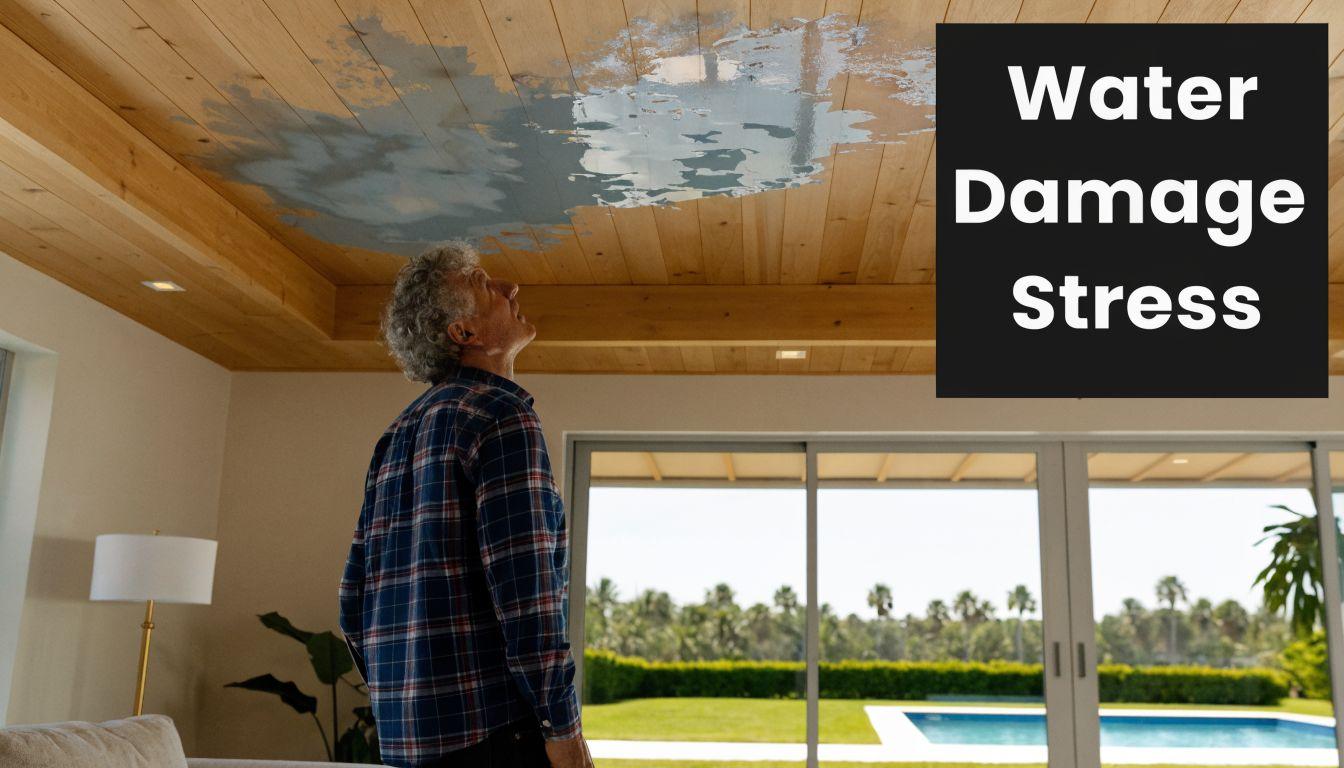
That concern is justified. Water damage accounts for 24% of all annual home insurance claims in the United States, and even minor damage can reduce sale price by 5% to 10%, while moderate damage involving mold can reduce value by 15% to 20% or more, according to HomeLight’s analysis of selling a house with water damage. In South Florida, where humidity, past storms, and flood history already shape buyer behavior, the financial hit often arrives before the first showing.
At-a-glance priorities
-
Find the source
If the leak is active, stop it before you do anything else. That may mean shutting off water, calling a roofer, or isolating an appliance line. -
Confirm the scope
Stains on drywall are obvious. Moisture inside wall cavities and under flooring is not. If the source isn’t clear, it helps to understand non-invasive leak detection methods before anyone starts opening walls unnecessarily. -
Decide whether you’re selling a damaged house or a repaired one
That sounds obvious, but many owners drift in the middle. They spend money on partial work without changing buyer perception or lender concerns.
Practical rule: Water damage is a legal and pricing issue as much as a repair issue.
Sellers who need a broader overview of damaged-property options can also review this guide on whether it’s possible to sell a damaged house. The short answer is yes. The hard part is choosing the path that limits additional loss.
What works and what doesn’t
- What works: fast stabilization, professional documentation, and a realistic decision on sale strategy.
- What doesn’t: cosmetic patching, vague disclosures, and pricing the house as if the damage never happened.
In Miami-Dade and Broward, selling a house with water damage is still possible. But the sellers who come out ahead treat it like a risk-management problem from day one.
First 48 Hours Damage Control and Documentation
The first two days matter because delay changes the condition of the property and the credibility of your future disclosure. If water is still entering the house, every hour increases the odds that drywall, trim, flooring, and subflooring will show wider damage by the time a buyer or adjuster sees it.

Stop active damage and preserve evidence
The sequence matters.
- Shut down the source: turn off the supply line, isolate the appliance, tarp the roof, or stop HVAC condensate overflow.
- Protect safety first: don’t step into areas where water may have reached electrical outlets, panels, or extension connections.
- Record the scene before cleanup changes it: take wide shots, close-ups, and walking video with date stamps visible if possible.
- Save paperwork: plumber invoices, emergency mitigation receipts, HOA notices, and insurance communications all become relevant later.
Florida sellers often hurt themselves by cleaning too aggressively before they document. A buyer, inspector, or insurer will still ask what happened. If you have no timeline and no visual record, you lose your negotiating advantage.
The insurance side also needs discipline. If you’re opening a claim, organized documentation tends to make the process cleaner. This resource on insurance claim tips for water damage is useful because it focuses on records, photographs, and communication habits that help preserve your position.
Visible staining is not the full scope
Water damage creates a critical 24 to 48 hour window before mold colonization begins, and hidden moisture in wall cavities requires specialized moisture mapping equipment, according to Opendoor’s disaster-damage guidance. That distinction matters more in Miami-Dade and Broward because the local climate accelerates moisture retention and mold risk.
A ceiling stain tells you where water appeared. It does not tell you where it traveled.
Common hidden problem areas include:
- Behind baseboards: water wicks upward and sideways.
- Under laminate or engineered flooring: the surface may look dry while the underlayment stays wet.
- Inside exterior wall cavities: especially after wind-driven rain.
- At window perimeters and slider tracks: repeated intrusion often leaves limited visible evidence at first.
Drying the room isn’t the same as confirming the structure is dry.
Moisture meters, thermal imaging, and formal moisture mapping are essential. If you later list the property, buyers will ask whether the problem was fully scoped or just cosmetically addressed.
A short visual primer helps if you want to understand how professionals approach damaged materials and inspection logic:
Documentation that protects you later
Create a file with:
- Photo chronology
- Video walkthroughs with narration
- Invoices and payment records
- Inspection findings
- Any remediation certificates or moisture readings
- Insurance correspondence
That file does two jobs. It helps support your pricing, and it helps show you didn’t conceal known defects. In South Florida, that’s not administrative busywork. It’s legal protection.
The Critical Decision Repair and List vs Sell As-Is
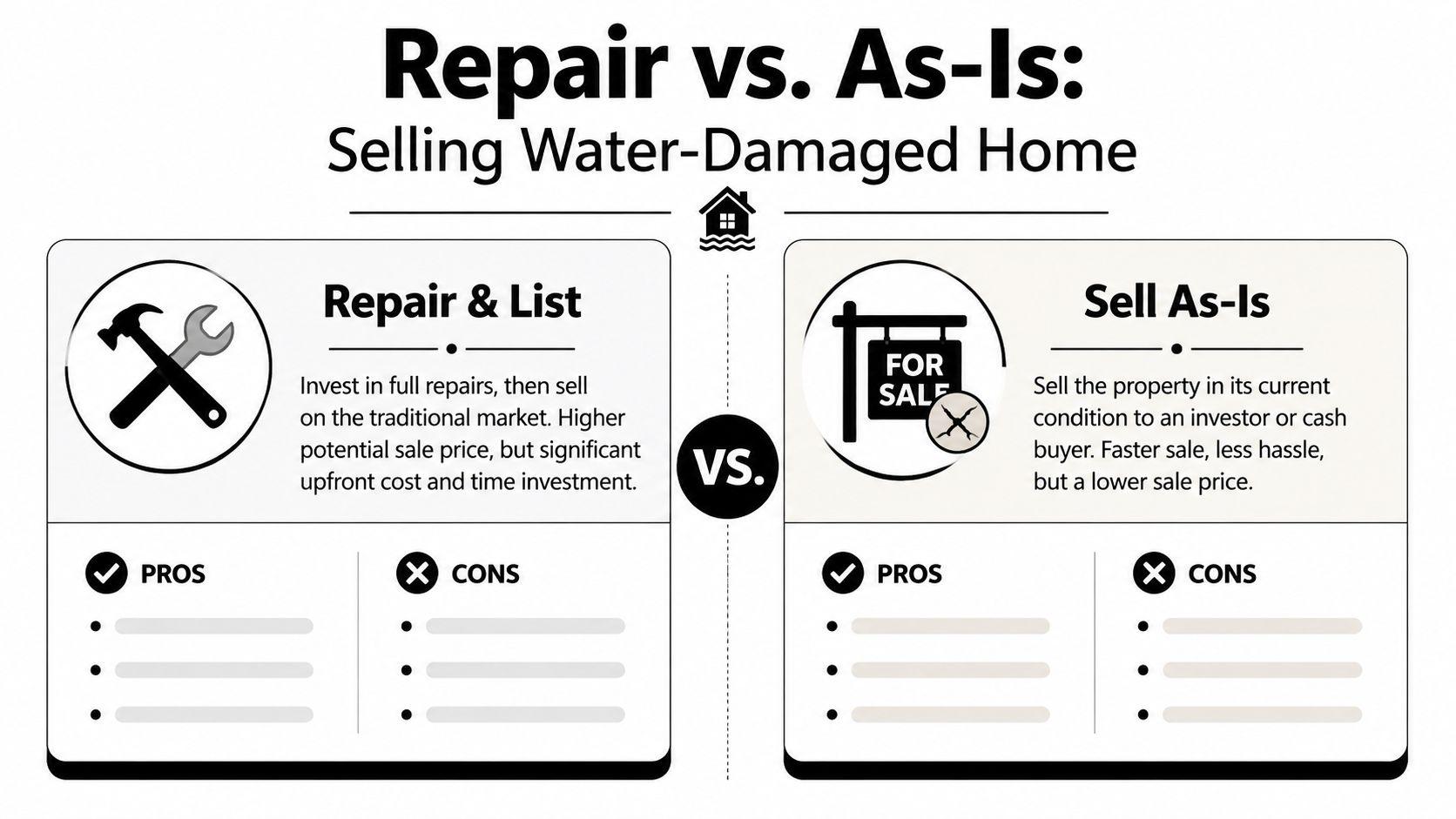
Most owners don’t face one choice. They face three. Research on water-damaged home sales identifies three sale pathways: repair then list, stabilize then list as-is, and sell as-is to investors. The investor path can close in 7 to 14 days, while repair-first listing can take months, as outlined in this analysis of water-damage sale pathways.
What each sale path really involves
Repair then list works best when the damage was isolated, the source is fully corrected, and you have the cash and patience to complete the work properly. This path preserves access to the broadest buyer pool. It also creates the most execution risk. Contractors uncover more damage. Insurance payouts don’t align with actual scope. Buyers still ask whether the property had prior mold or flood history.
Stabilize then list as-is is the middle route. You fix the source, dry the structure, gather documentation, and tell the market exactly what remains unfinished. This can work for older homes in Miami-Dade or Broward where buyers already expect some deferred maintenance. It does not work well when the unresolved issues affect habitability, financing, or mold perception.
Sell as-is to an investor prioritizes certainty. The trade-off is price. The benefit is speed, no repair outlay, and fewer moving parts. For many owners, especially those dealing with probate, financial distress, liens, or a vacant house, that certainty has financial value.
Sale Strategy Comparison Repair & List vs Sell As-Is to Investor
| Factor | Repair & List (Traditional Sale) | Sell As-Is (Cash Investor Sale) |
|---|---|---|
| Upfront cash required | Usually higher because seller funds repairs, cleanup, and holding costs | Usually lower because property sells in current condition |
| Timeline | Often longer due to contractor scheduling, listing prep, showings, inspection, and financing | Often faster, especially when buyer uses cash and skips lender delays |
| Buyer pool | Larger if repairs satisfy habitability and appraisal standards | Narrower, usually investors or specialized cash buyers |
| Price expectation | Higher gross price is possible | Lower gross price is typical |
| Risk of renegotiation | Higher after inspection and appraisal | Lower if the buyer underwrites condition upfront |
| Disclosure burden | Still required | Still required, but sophisticated buyers are usually more familiar with distressed-property risk |
| Stress level | Higher for most sellers because there are more decision points | Lower for sellers who want speed and fewer contingencies |
| Net proceeds visibility | Harder to predict until repair scope and buyer concessions are known | Easier to estimate once the offer is issued |
For a direct look at how many owners approach this route, this page on selling a house as-is gives a practical reference point for the investor-sale process.
What usually works in South Florida
In Miami-Dade and Broward, the deciding question is rarely “Which path gets the highest headline price?” The better question is “Which path controls downside risk?”
A repaired house with a documented water history can still trigger buyer fear. A clean disclosure package helps, but it doesn’t erase stigma.
Repair-first usually works when the damage was limited and you can complete the job at a high standard. Selling as-is usually works when the house has hidden-moisture risk, mold concerns, flood history, financing obstacles, or ownership complications.
What does not work is the half-measure. Sellers who patch drywall, paint over stains, and list at near-retail pricing usually get hit twice. First by low offers. Then by inspection-driven renegotiation.
Florida’s 2026 Disclosure Laws and Legal Liabilities
In Florida, water intrusion is no longer just a condition issue. It’s a disclosure issue with real liability. As of 2025, Florida Statute 627.701 requires sellers to disclose a 10-year flood history. In Miami-Dade, where annual flood losses exceed $500M, unresolved water damage can reduce values by 35% to 50%, based on the verified legal and market data provided for this topic.

What Florida sellers have to disclose
If you know about prior flooding, recurring intrusion, water-related insurance claims, or remediation history, that information belongs in your disclosure posture. In practice, that means sellers should be ready to produce:
- Flood history records: whether the house took on water and when
- Insurance claim history: if claims were filed for covered water loss
- Repair and remediation documents: what was done, by whom, and when
- Elevation-related records when applicable: if relevant to prior flood documentation
- Known recurring conditions: seepage, drainage issues, or repeated intrusion points
Many sellers make a critical error here. They treat “repaired” as “irrelevant.” Florida law does not reward that assumption. Repaired damage still matters if the history itself is material to a buyer.
For a deeper legal overview, this guide to Florida as-is disclosure laws is a useful supplement.
Why unresolved damage gets punished harder in Miami-Dade
Miami-Dade and Broward buyers don’t view water damage in a vacuum. They connect it to flood exposure, insurability, mold risk, and future resale. That’s why unresolved water issues get discounted more aggressively than many sellers expect.
Three things drive the larger discount:
-
Flood-history transparency
Once a buyer knows the property has a documented flood or intrusion history, they start pricing future risk, not just past repairs. -
Financing friction
Conventional lenders, appraisers, and insurer reviews can all complicate closing when visible damage, moisture concerns, or habitability questions remain. -
Post-closing lawsuit risk
Buyers who later discover undisclosed known defects have a clearer path to claim concealment than they did when records were thinner.
Legal reality: Selling “as-is” does not mean selling without disclosure.
That phrase causes confusion in Florida. “As-is” changes repair obligations in the contract. It does not erase the duty to disclose known material facts. If you know the house had flood intrusion, recurring leaks, hidden mold remediation, or unresolved seepage, silence is dangerous.
The practical implication is simple. In 2026, selling a house with water damage in South Florida is partly a legal file-management exercise. The cleaner your records and the more honest your disclosures, the fewer surprises you’ll face in escrow.
How to Price and Negotiate Your Sale
Pricing a water-damaged house in Miami-Dade or Broward starts with a hard truth. The market will not price the house based on your repair hopes. It will price the house based on current condition, known history, financing risk, and what nearby buyers have recently accepted.
According to Naples Group’s discussion of homes with water problems, homes with apparent water damage linger longer on the market and face depressed appraisals due to declining comps, mandatory disclosures, and insurance complications. That pattern fits what sellers in South Florida see in practice. Once damage is visible, the negotiation stops being emotional and becomes forensic.
How traditional buyers and appraisers look at damage
Traditional buyers usually ask four questions:
- What caused the damage?
- Was the source fixed?
- Is there hidden moisture or mold?
- Will my lender approve this condition?
Appraisers ask a narrower question. What is this house worth in its present condition compared with recent comparable properties? If nearby damaged properties sold at a discount, those comps pull value down. If the appraiser sees visible damage or signs of unresolved moisture, the report can become a problem for FHA or VA financing because habitability standards matter.
That’s why overpricing a damaged property backfires. It doesn’t create room to negotiate. It tells buyers the seller doesn’t understand the issue.
If you’re considering whether any renovation work makes financial sense before listing, a disciplined feasibility review helps. This Ofir Engineering renovation ROI strategy is useful because it frames repairs as an investment decision, not an emotional reaction.
How investors calculate an as-is offer
Investor pricing is usually more direct. The buyer starts with after-repair value, then subtracts the cost of repairs, carrying risk, transaction friction, and required margin. That often feels blunt, but it has one advantage. The logic is visible.
A fair as-is offer usually reflects:
- Current condition: visible and suspected hidden damage
- Scope uncertainty: whether walls, subfloors, or mechanicals may hold additional moisture issues
- Time burden: how long the buyer expects to stabilize, remediate, and resell
- Title or ownership complications: probate, liens, HOA issues, or code matters
- Convenience value to the seller: speed, no showings, no repair spending, and fewer contingencies
For a closer look at that math, this explainer on how Florida cash home offers are calculated in 2026 lays out the framework clearly.
The right comparison isn’t retail list price versus cash offer. It’s net proceeds after repairs, concessions, carrying costs, and closing risk.
The strongest negotiators in this situation are the sellers who know their file. They can show source repair invoices, moisture readings, photos, and insurance records. Even if they take an as-is route, clean documentation supports a better conversation and filters out unserious lowball buyers.
Closing Your Sale and Moving Forward
The gap between contract and closing is where many water-damage deals fall apart. The seller thinks the hard part is finding a buyer. In reality, the hard part is surviving inspection, appraisal, insurance review, and lender conditions without a price cut or cancellation.
Traditional closing friction
A traditional sale usually introduces fresh scrutiny after contract signing. The inspector documents damage history. The buyer asks for credits. The lender wants the property to meet its standards. The appraiser comments on condition and comparable sales. If any one of those participants sees unresolved risk, the deal can slow down or collapse.
That’s especially difficult when the seller has already moved out, is carrying two homes, or is trying to settle an estate. Each extra week adds uncertainty. If new moisture appears during escrow because the original issue wasn’t fully solved, the negotiation resets from a weaker position.
Why cash closings feel different
A cash closing is simpler because there is no lender imposing property-condition rules. The buyer underwrites the risk directly. If they are comfortable with the condition upfront, there is less chance of a late-stage surprise tied to financing.
This route also works better for houses that aren’t ready for normal showing standards. Sellers can leave behind damaged materials, old furniture, or unneeded contents and focus on transfer instead of presentation. In practical terms, that changes the experience from “repair, list, negotiate, defend, and hope” to “disclose, agree, and close.”
For owners who need certainty more than upside, that difference matters. Selling a house with water damage is rarely pleasant. But it becomes manageable once the sale path matches the actual condition of the property.
Frequently Asked Questions
Do I have to disclose old water damage if it was repaired?
Yes. If you know about prior water intrusion, flooding, claims, or remediation history, treating the issue as “fixed” doesn’t remove the duty to disclose a material condition history.
Can I sell a water-damaged house with mold?
Yes, but the sale path changes. Mold raises buyer concern, lender scrutiny, and negotiation pressure. Many sellers either complete formal remediation with documentation or choose an as-is sale to a cash buyer.
Will probate make the process harder?
Often, yes. In Miami-Dade and Broward, 15% of 2025 cash sales involved probate properties with water issues, and those homes often sold for 20% to 40% below market due to executor liability fears and remediation costs, based on the verified probate market data provided for this article. Probate plus water damage creates a documentation and liability problem, not just a repair problem.
Can an as-is contract protect me from future claims?
Not by itself. “As-is” does not cancel the obligation to disclose known material facts.
Should I repair first or sell now?
That depends on scope, cash reserves, timeline, and legal exposure. If the damage is isolated and fully correctable, repair may preserve value. If the file is messy, the history is concerning, or time matters more than upside, an as-is exit is often the cleaner choice.
If you need a direct cash option in Miami-Dade or Broward, Property Nation buys houses in as-is condition, including homes with water damage, flood history, probate complications, liens, or heavy cleanup issues. You can request a no-obligation offer, choose your closing date, and avoid repairs, showings, and commissions.