

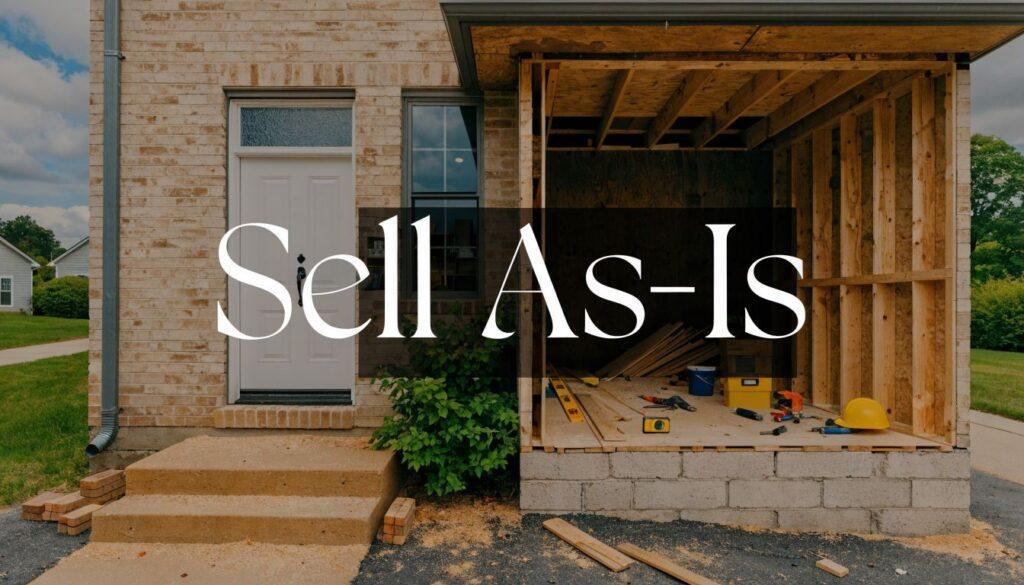
You’re getting ready to sell. Then a pre-sale walkthrough turns up the problem you were hoping wouldn’t matter. The garage was converted years ago. The patio was enclosed. A prior owner added a bathroom, but the county record doesn’t show it. In Miami-Dade and Broward, that isn’t a paperwork annoyance. It can affect value, financing, insurance, disclosure, and whether the deal closes at all.
In South Florida, unpermitted work creates a chain reaction. Appraisers may exclude the space. Lenders may refuse the file. Buyers may worry about code enforcement, HOA questions, or future insurance problems. If the issue surfaces late, the transaction can stall right when you need certainty most.
Selling a house with unpermitted work is still possible. It just requires a disciplined approach. You need to know what’s on record, what must be disclosed, where the financial hit comes from, and which exit path fits your timeline and risk tolerance.
Table of Contents
- At-a-Glance The Unpermitted Work Dilemma in South Florida
- Conducting Your Own Permit Audit Before You List
- Comparing Your Three Options A Decision Framework
- Florida’s Legal Minefield Disclosure Liability and 2026 Insurance Rules
- The Financial Impact Calculating Your True Sale Price
- The Strategic Exit A Direct Sale for Speed and Certainty
- Frequently Asked Questions About Unpermitted Work
- Do I have to disclose unpermitted work if a previous owner did it?
- What if the unpermitted work is very old and has never caused a problem?
- Can I sell an inherited house if I’m not sure what was permitted?
- Will title insurance protect the buyer from permit problems?
- Is selling as-is enough to protect me?
At-a-Glance The Unpermitted Work Dilemma in South Florida
A Miami-Dade or Broward seller often learns about unpermitted work at the worst possible moment. The house is cleaned up, photos are done, a buyer is under contract, and then the appraiser flags enclosed square footage that never made it into the permit record. At that point, the issue is no longer cosmetic. It is a closing risk tied to financing, insurance, disclosure, and who carries the liability after the deed transfers.
In South Florida, this problem shows up in familiar places. Garage conversions in Westchester. Enclosed patios in Pembroke Pines. Added bathrooms in older Miami Gardens and Hialeah homes. The work may be functional and even well built. County records still control how lenders, underwriters, and many buyers view the property.
That creates three realistic paths.
- Clear the issue before listing: Apply for after-the-fact permits, open walls if the city or county requires it, bring any noncompliant work up to code, and wait through review.
- List on the open market with full disclosure: Accept that financed buyers, insurers, and appraisers may treat the home as smaller, riskier, or both.
- Sell directly to a cash buyer: Remove the lender and appraisal bottleneck, shorten the timeline, and price the risk into the deal upfront.
I tell sellers to decide based on certainty, not hope.
That matters more in 2026 than it did a few years ago. Florida insurers have become less forgiving about undocumented electrical, plumbing, roof, and structural changes, and local code enforcement in Miami-Dade and Broward does not care that the work was done by a prior owner. If the property has open permits, code violations, or unpermitted additions, those issues can follow the house into the sale and create post-closing disputes if the disclosure was incomplete.
A smart first move is to confirm what you have before you spend money getting the home market-ready. That can start with county records, but a professional home inspection also helps identify hidden red flags such as panel changes, relocated plumbing lines, or enclosed areas that look original but were never approved.
The core problem is simple. South Florida buyers are not just buying square footage. They are buying financeability, insurability, and a clean path to ownership. If the work is not documented, a cash sale is often a strategy for controlling risk, not a last resort.
Conducting Your Own Permit Audit Before You List
The fastest way to lose control of a sale is to let the buyer discover the problem first. Before you list, run your own permit audit and compare the public record to the house as it exists today.

Start with the county record
Pull the property record from the local property appraiser and building department. In Miami-Dade and Broward, that usually means reviewing the recorded square footage, bed and bath count, permit history, and any obvious mismatch between tax record data and the actual layout.
Then walk the house with a checklist.
- Measure what’s enclosed: Focus on garage conversions, Florida rooms, patio enclosures, rear additions, extra bathrooms, and detached structures.
- Match the room count: If the county shows two baths and the home has three, that’s a flag.
- Check major systems work: Electrical panel changes, plumbing relocations, roofing-related structural changes, and HVAC expansions often leave a trail if permitted.
- Review prior closing documents: Old seller disclosures, surveys, contractor invoices, and insurance applications can reveal when the change happened.
A permit audit isn’t just a legal exercise. It’s a pricing exercise. Sellers often face a crisis when unpermitted work is discovered during appraisal. If a house is marketed as 2,500 square feet but permits only account for 1,800, that valuation mismatch can collapse the deal, as noted in this discussion of appraisal problems tied to unrecorded additions.
Build a discrepancy file
Once you spot a mismatch, organize it. Don’t rely on memory.
- Create a property file: Save screenshots of public records, permit searches, sketches, receipts, and photos.
- Separate facts from assumptions: “Bathroom added in rear section” is a fact. “Probably done by previous owner around 2012” is an assumption unless you have proof.
- Get independent eyes on the condition: A detailed professional home inspection can help you understand whether the work merely lacks paperwork or shows visible safety or workmanship concerns.
A clean permit history is ideal. A documented discrepancy is still manageable. A surprise discovered during escrow is where sellers lose leverage.
If you own in a neighborhood with many older modifications, don’t assume everyone will ignore it because “that’s common here.” Buyers may tolerate risk. Lenders and insurers often won’t.
Comparing Your Three Options A Decision Framework
Once you know what’s missing from the record, the next question is strategic. Not moral. Not emotional. Strategic. You need to decide whether time, net proceeds, or certainty matters most.
The three paths are straightforward, but the trade-offs are sharp.
Decision Matrix Selling a Florida Home with Unpermitted Work
| Factor | Remediate & List | List As-Is on MLS | Sell Direct to Cash Buyer (Property Nation) |
|---|---|---|---|
| Primary goal | Maximize financeability | Test market demand with disclosure | Prioritize speed and certainty |
| Timeline pressure | Usually the slowest route because inspections alone can take up to six weeks, according to this discussion of retroactive permit delays | Unpredictable because buyers may pause, renegotiate, or walk | Built for fast execution |
| Upfront cost | Highest, because you may need plans, contractor work, and permit fees | Moderate, mainly through price concessions and pre-listing prep | Lowest upfront seller spend in most cases |
| Deal certainty | Better if the work passes and records get updated | Lower, because disclosure does not remove financing risk | Highest when no lender approval is required |
| Buyer pool | Broadest if the issue is fully resolved | Narrower because many financed buyers won’t proceed | Focused on buyers comfortable with as-is condition |
| Stress level | High if county requires opening walls or corrections | High during inspections and appraisal | Lower because the condition is priced in from the start |
| Best fit | Sellers with time, cash, and work that is likely code-compliant | Sellers who can tolerate delays and failed contracts | Sellers dealing with probate, foreclosure pressure, liens, vacancy, or inherited property |
A related question comes up often. Should you renovate first or move the property as-is? This guide on whether to renovate a house for sale or sell as-is is useful because it frames the decision around timeline and risk, not just headline price.
How to choose the least risky path
If the work is minor, documented, and likely to pass with limited correction, remediation may make sense. If the work is extensive, old, or hidden behind finished walls, the remediation route can expand fast.
If you list as-is on the MLS, you need to expect buyer behavior that is completely rational from their perspective.
- They’ll ask for credits: Even when the actual fix is unclear.
- They’ll revisit price after inspection: Because uncertainty has value, and they’ll price that uncertainty against you.
- They may lose financing: Not because they changed their mind, but because the lender or insurer objected.
If you need a predictable closing date, an open-market strategy often works against you. If you can wait and you want to test demand, it may still be worth trying. The key is not to confuse “listed” with “sold.”
Florida’s Legal Minefield Disclosure Liability and 2026 Insurance Rules
Florida sellers don’t get protection by staying vague. If you know about unpermitted work, silence is dangerous. General language about selling “as-is” doesn’t erase the obligation to disclose known material issues.

What disclosure does and does not fix
Disclosure helps reduce post-sale disputes. It does not solve every downstream problem. If the buyer learns before closing that a room, enclosure, or converted space is not permitted, they may still back out, seek credits, or fail to get financing.
The rule for sellers is simple. Be specific. If you know the rear patio was enclosed without permit records, say that. If a prior owner converted the garage and you have no permit file to support it, say that. If you don’t know when the work occurred, don’t guess.
A practical starting point is reviewing Florida-specific seller duties around transparency and material defects. This explanation of Florida as-is disclosure laws is a good reminder that “as-is” affects repair obligations, not the duty to disclose what you know.
Disclosure is a shield, not a cure. It can reduce one category of legal exposure while leaving financing and insurance problems completely intact.
The 2026 insurance environment in Florida makes this more serious. Buyers already scrutinize roof age, claims history, updates, and wind mitigation issues. Add unpermitted space or undocumented system changes, and the underwriting conversation gets harder. Sellers who want a smooth retail transaction should understand how buyers compare carriers and coverage standards. A tool like this Florida homeowners insurance comparison helps illustrate how underwriting varies, even before unpermitted work enters the file.
The insurance problem after closing
One of the least discussed problems is what happens after the sale. A buyer may close, move in, and later learn that their homeowner’s policy won’t cover damage tied to the unpermitted addition. Title insurance may also not cover permit-related issues. That post-purchase insurance gap creates liability concerns for both sides, even after a disclosed transaction, as described in this discussion of insurance and title concerns involving unpermitted work.
That means full disclosure is necessary, but it may not be the end of the story. If a future claim is denied because the damaged portion of the home traces back to unpermitted work, the buyer may still revisit who knew what and when.
A short explainer on insurance and real estate risk is worth watching here:
For Miami-Dade and Broward sellers, the safest posture is documentation. Keep copies of disclosures, permit searches, correspondence, and any written acknowledgment from the buyer. Don’t overstate what’s legal, code-compliant, or insurable unless you have proof.
The Financial Impact Calculating Your True Sale Price
In South Florida, the sale price that matters is the one a buyer can close on. Unpermitted work changes that number fast because value, loanability, and insurability stop lining up.

Why the appraisal gap hits so hard
A finished garage conversion may feel like added living area to the owner. For lending purposes, an appraiser may treat that same space as non-living area if the work was never permitted or cannot be verified. In Miami-Dade and Broward, that difference shows up quickly because buyers, lenders, and insurers all review square footage and condition through different standards.
The result is a smaller loan base and a harder negotiation.
A seller may look at nearby closed sales and conclude the house should bring full market value. The buyer’s lender may disagree because the comparable sales include permitted square footage and the subject property does not. Then the buyer has to decide whether to bring extra cash, ask for a credit, or walk. In 2026 Florida, with carriers and underwriters taking a tighter view of property condition, that gap is more than an appraisal issue. It becomes a closing-risk issue.
The buyer’s negotiation math
Retail buyers usually stack the problem in this order. First, what value will the lender support? Second, what repairs or permit fixes might the city or county force later? Third, will the monthly payment still work once insurance and reserves are adjusted? Tools that show how much house buyers can afford in 2026 help explain why even interested buyers start reducing their offer once uncertainty enters the file.
That is why disclosure alone rarely preserves the price you had in mind.
- The appraiser may ignore disputed square footage
- The lender may reduce the approved loan amount
- The buyer may ask for a credit based on permit, code, or insurance risk
- The deal may fall apart after inspection, costing you more time, taxes, utilities, and mortgage payments
South Florida sellers also need to price in correction cost, not just buyer fear. If the issue involves electrical, plumbing, roofing tie-ins, enclosed terraces, or converted spaces, the full cost is often a mix of permit fees, plans, contractor work, opening finished walls, and the chance that the city requires partial demolition before sign-off. I have seen owners focus on the cosmetic upgrade and miss the expensive part, which is proving the work is legal and insurable after the fact.
For sellers trying to estimate a realistic as-is number, this explanation of how Florida cash home offers are calculated in 2026 is useful because it focuses on repair scope, closing risk, holding costs, and the discount buyers apply when permit status is unclear.
The Strategic Exit A Direct Sale for Speed and Certainty
Not every seller should remediate. Not every seller should test the MLS. If you’re dealing with foreclosure pressure, probate, inherited property, tenant damage, code concerns, or a house that can’t survive a financed buyer’s underwriting review, speed and certainty matter more than debate over top-dollar theory.
Where direct sales work best
A direct cash sale fits situations where the problem is bigger than the permit itself. Maybe the house also has old roofs, lien issues, deferred maintenance, or a family timeline that doesn’t allow months of county follow-up. In those cases, a fast as-is sale isn’t a shortcut. It’s a risk management decision.
Selling to a specialized cash buyer has a 90-95% success rate for closing within 7-14 days, while 40-50% of traditional sales involving unpermitted work fail because lenders deny the mortgage, according to this Nolo discussion of selling when unpermitted construction is discovered.

What the process looks like
The advantage of a direct sale is that the deal is built around the property’s actual condition from day one.
- You disclose what you know: No games, no optimistic framing.
- The buyer evaluates the property as-is: Including title issues, condition problems, and permit uncertainty.
- You avoid lender and appraisal contingencies: That removes the most common failure point.
- You close on a practical timeline: Often based on your needs, not a bank’s.
If your priority is to exit cleanly rather than litigate value in the middle of escrow, an as-is sale structure can be the better tool. Sellers exploring that route can review how an as-is home sale works in Florida and compare it against the carrying costs and uncertainty of a retail listing.
The best exit is the one that closes on time, with known terms, and without creating a second problem after the first one is solved.
Frequently Asked Questions About Unpermitted Work
Do I have to disclose unpermitted work if a previous owner did it?
Yes, if you know about it. The key issue is knowledge. If county records, prior disclosures, contractor receipts, or your own investigation show the work was done without permits, disclose it clearly and specifically.
What if the unpermitted work is very old and has never caused a problem?
Age doesn’t automatically fix the issue. A decades-old enclosure or conversion may still create appraisal, financing, insurance, or code questions when you sell. Old work can be stable in daily use and still be a transaction problem because the record doesn’t match the property.
Can I sell an inherited house if I’m not sure what was permitted?
Yes, but uncertainty is not a reason to stay silent. In probate and inherited property cases, start with a permit audit, gather whatever records exist, and disclose the limits of your knowledge accurately. Don’t represent work as permitted unless you can verify it.
Will title insurance protect the buyer from permit problems?
Not necessarily. Permit-related issues and insurance gaps can remain even after closing. If the buyer is concerned, that should be addressed before the sale, not assumed away.
Is selling as-is enough to protect me?
No. “As-is” does not replace disclosure. It may define who handles repairs, but it doesn’t remove the obligation to tell the truth about known defects or unpermitted work.
If you need to sell a South Florida house with unpermitted work and want a clear path without listings, repairs, or financing delays, Property Nation buys houses as-is across Miami-Dade and Broward. You can request a cash offer, review your options, and choose a closing timeline that fits your situation.