


You may be sitting in a Miami-Dade condo or a Broward single-family home right now, staring at two separate problems that refuse to stay separate. One is the divorce. The other is the house. In practice, they’re tied together through title, mortgage liability, taxes, repairs, HOA requirements, insurance questions, and the simple fact that both spouses usually need to sign off before anything moves.
That’s why how to sell a house during divorce can’t be handled like a normal listing. A standard sale process assumes one decision-maker, a unified budget, and a shared goal. Divorce removes all three. If one spouse wants top dollar, the other wants speed, and neither wants to pay for repairs, the property turns into a stalled asset instead of a source of liquidity.
In South Florida, the friction gets worse. Miami-Dade and Broward sellers often deal with older roofs, insurance scrutiny, condo and HOA disclosure packages, municipal permit questions, and buyers who walk the moment a file looks messy. Divorce makes every one of those issues more expensive because each decision requires coordination.
A practical framework is essential. There are only a few real paths. One spouse keeps the property through a buyout. Both spouses list it on the open market. Or they sell directly for cash and bypass the usual prep, showings, and negotiation loop. If you want a second legal perspective on the mechanics of timing and decision-making, Bryan Fagan’s insights on home sales are useful background. If you need Florida-specific help with a divorce property sale, Property Nation’s divorce sale service addresses the local side of the process.
Table of Contents
- Navigating the Sale of Your Marital Home in a Florida Divorce
- The Three Paths for Your Property Post-Divorce
- Preparing for a Traditional Market Sale During Divorce
- The Fast-Track Alternative a Direct Cash Sale
- Managing the Legal and Financial Details in Florida
- Common Pitfalls and How to Avoid Them
- FAQ Selling a House in a Florida Divorce
- Can one spouse sell the house without the other in Florida
- Who pays the mortgage and other bills while the house is for sale
- What if the house needs repairs but neither spouse wants to pay
- How should divorcing spouses handle an HOA or condo association in Broward or Miami-Dade
- Do Florida insurance issues affect a divorce sale
- Is a cash offer easier to present in a divorce
- What if one spouse keeps changing their mind
Navigating the Sale of Your Marital Home in a Florida Divorce

The house is usually the largest asset in the marriage. It’s also the asset that creates the most friction because it carries memory, debt, ongoing expenses, and legal obligations all at once. In Florida divorces, the smartest approach is to stop treating the home as emotional space and start treating it as a transaction file.
At a glance
If you’re deciding what to do with the marital home, focus on five questions first:
- Can either spouse afford a buyout: That means cash, financing, and the ability to carry the home alone after closing.
- Can both spouses cooperate for a listing: Traditional sales require agreement on price, repairs, access, offers, and timing.
- Is the house market-ready: Deferred maintenance, liens, code issues, or tenant problems change the available options quickly.
- What does timing do to taxes: Selling before or after the divorce can materially change the capital gains treatment.
- How fast do you need liquidity: Some couples need proceeds for attorney fees, debt payoff, deposits, or replacement housing.
Practical rule: In a divorce sale, speed and certainty often matter more than squeezing for the last possible dollar, because delay has a cost.
The South Florida reality
In Miami-Dade and Broward, I’ve seen the same pattern repeatedly. Couples assume the house will be the easy part because “real estate sells.” Then the file gets stuck over access for showings, insurance questions from buyers, HOA estoppels, unresolved permits, or simple refusal to pay for basic work.
Florida law and contract practice don’t reward indecision. If there’s a pending agreement, a court order, or a hard deadline in mediation, the property has to move in a way that matches the legal process. That means the right strategy isn’t the most familiar one. It’s the one both spouses can execute.
The Three Paths for Your Property Post-Divorce
There are only three practical outcomes for most marital homes. One spouse buys out the other. Both spouses sell on the open market. Or both spouses agree to a direct cash sale. Every argument about the house usually reduces to those choices.
What each path really means
A spousal buyout works when one party wants to stay and can qualify to carry the property alone. This sounds clean, but it only works if the numbers work. Sentiment doesn’t qualify for financing.
A traditional market sale aims for maximum exposure. It can produce a strong result, but it also requires cooperation. Existing guides lean heavily toward staging and MLS exposure, yet Florida 2025 housing trend commentary cited here says divorce-related sales dropped 18% year over year, and 62% of distressed sellers cited spousal disputes delaying repairs as a top barrier. That aligns with what happens on the ground. The listing strategy fails when the parties can’t execute basic prep work together.
A direct cash sale removes many of those friction points. It’s usually the most practical fit when the home needs work, one spouse won’t cooperate with showings, liens have to be resolved, or both parties need a fast and definite exit.
Home Sale Options During Divorce A Comparison
| Factor | Traditional Market Sale | Direct Cash Sale (As-Is) | Spousal Buyout |
|---|---|---|---|
| Speed to Close | Slower, because prep, listing, showings, contract negotiation, and buyer financing all take time | Faster, because the property can be sold as-is on a compressed timeline | Fast only if financing and settlement terms are already resolved |
| Net Proceeds | Can be reduced by commissions, repairs, staging, concessions, and carrying costs | Often lower headline price, but fewer transaction frictions and no repair burden | Depends on appraisal, refinance terms, and whether the staying spouse can absorb the mortgage |
| Process Certainty | Lower, because inspection issues, financing, and buyer withdrawals can disrupt closing | Higher, because the process is simpler and less exposed to retail buyer objections | Moderate, because approval and documentation still control the timeline |
| Level of Conflict | Highest in contested divorces, since spouses must coordinate many decisions | Lower, because fewer decisions need joint management after offer terms are agreed | Can be high if value and buyout credits are disputed |
| Privacy | Lowest, since strangers walk the property and transaction details circulate through the market | Higher, with limited access and a tighter transaction process | Highest, because the home doesn’t go public |
The best path isn’t the one that sounds ideal in theory. It’s the one both spouses can complete without sabotaging the result.
For Miami-Dade and Broward couples, the right choice usually comes down to a simple question. Are you trying to maximize exposure, or are you trying to end shared liability fast and cleanly?
Preparing for a Traditional Market Sale During Divorce
A traditional listing can work. It just asks a lot from two people who are already trying to unwind a legal and financial relationship. That’s why this option needs discipline from day one.

Where traditional listings break down
A divorce listing isn’t delayed by the market first. It’s delayed by the sellers. One spouse won’t approve the price. The other won’t fund repairs. Someone refuses weekend showings. Someone leaves the property in poor condition. Then the buyer asks for credits after inspection and the conflict resets.
That’s why timelines matter. This guide on divorce sale timing and cost structure notes that a traditional sale typically takes a minimum of 2-3 months, and agent commissions commonly run 5-6% of the sale price, before repairs, staging, and closing costs. In divorce, every one of those line items becomes a negotiation between the spouses.
If you’re deciding whether to list without an agent, this comparison of selling by owner versus listing with a Realtor is useful context. In contested situations, for-sale-by-owner usually creates even more conflict because there’s no neutral operator controlling process and communication.
What has to be agreed before you list
Before the property hits the MLS, get these issues settled in writing through counsel or mediation when possible:
-
List price and price reduction authority
If the home sits, who can approve a reduction and on what schedule? -
Repair budget
Decide what gets fixed, who pays, and what happens if one spouse refuses. -
Access protocol
Set rules for lockboxes, showing windows, pets, tenants, and occupied rooms. -
Offer review procedure
Decide whether both spouses must sign each counteroffer and how quickly responses must be made. -
Expense tracking
Keep a shared ledger for mortgage, utilities, HOA dues, insurance, lawn service, and sale prep.
Operational advice: A traditional listing needs one neutral agent, one communication channel, and one written approval process. Anything less creates drift.
In Broward communities with active HOAs, disclosure packages and estoppel work can slow the file if no one takes ownership of the paperwork. In Miami-Dade, older homes often trigger insurance concerns or buyer caution over roof age and prior work. None of these issues is fatal. They become fatal when a divorcing couple can’t make timely decisions.
A traditional sale works best when both spouses still have enough functional trust to behave like business partners for the length of the transaction.
The Fast-Track Alternative a Direct Cash Sale
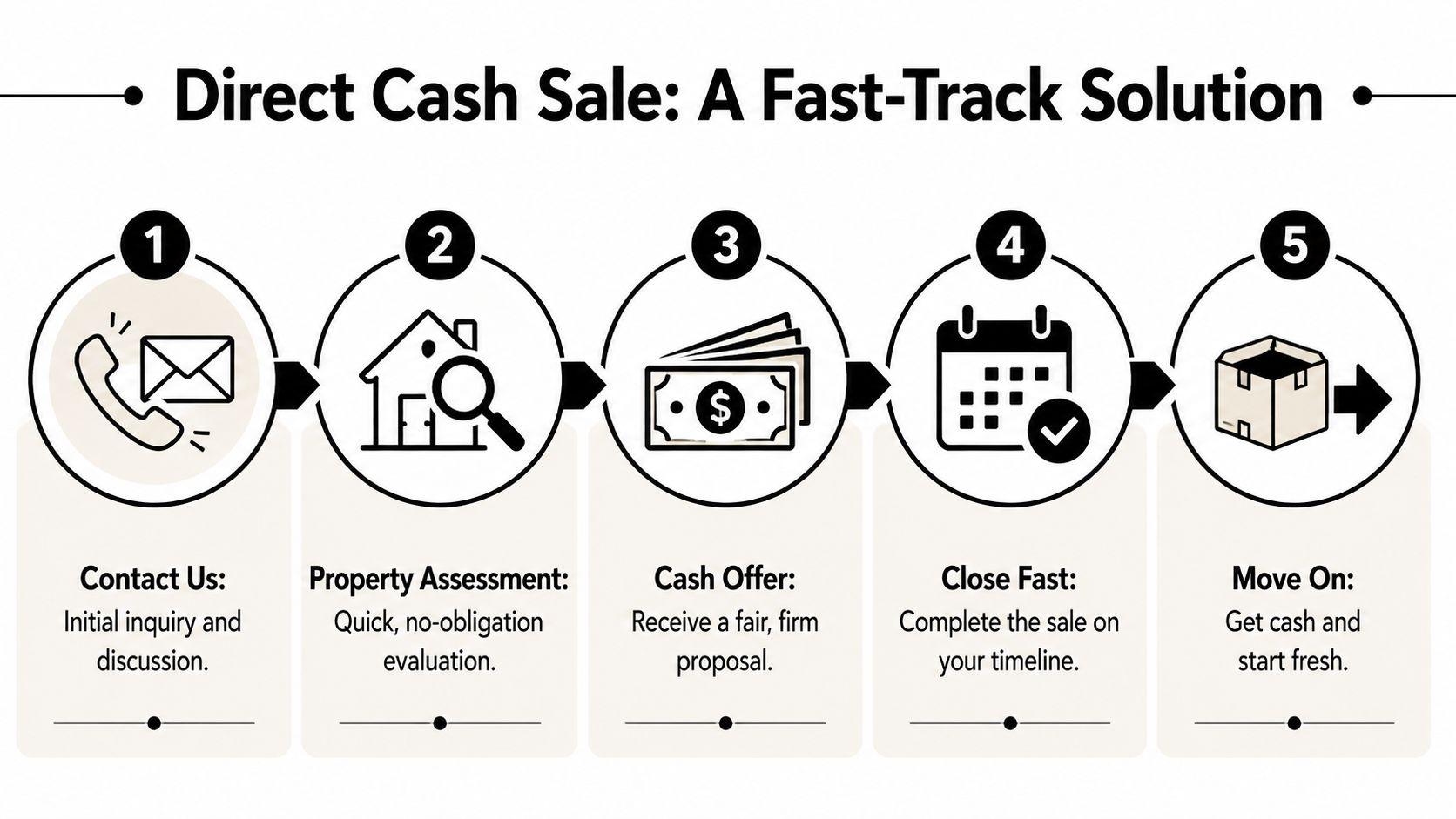
The direct cash route exists for the situations where a normal listing keeps breaking. It’s not just for distressed houses. It’s for distressed decision-making.
Why this option changes the conflict dynamic
The biggest advantage of a direct cash sale is simplification. No staging plan. No debate over paint colors. No repeated showings. No repair list after an inspection from a financed buyer who may still cancel. The house sells in its current condition, and both spouses can focus on division of proceeds instead of retail presentation.
That matters in divorce because the property often carries extra complications. There may be a lien. One spouse may have moved out and stopped caring for the property. The home may be outdated, damaged, cluttered, or tied up in a broader settlement fight. In those cases, “getting it market ready” is often where the process dies.
A local cash buyer also compresses the timeline. The verified guidance in the brief allows the practical point that divorce sellers may choose offers in 24 hours and closings in 7-14 days in appropriate cash transactions, which is often useful when legal fees, move-out timing, or debt pressure make delay expensive.
Later in the process, it helps to understand how an investor arrives at a price. This explanation of how Florida cash home offers are calculated in 2026 is worth reviewing before you compare options.
Here’s a short overview of the workflow:
What to review before accepting a cash offer
Cash is simpler, but you still need discipline.
- Confirm title issues early: Liens, probate overlap, judgments, and unpaid municipal items should be identified upfront.
- Match the closing date to the divorce timeline: A fast closing is only helpful if the settlement and signatures are aligned.
- Read the net sheet, not just the offer price: The useful number is what each spouse receives after payoff and approved charges.
- Check occupancy terms: If one spouse needs a short post-closing move period, get it documented properly.
A clean as-is sale often does more than save time. It removes the recurring arguments that destroy ordinary listings.
Managing the Legal and Financial Details in Florida
The house doesn’t sell just because both spouses agree. It sells when title, taxes, payoff, and closing instructions line up with the divorce file.

Title settlement and closing logistics
Many married Florida homeowners hold title in a way that requires both spouses to participate in any sale unless a court order says otherwise. In practice, that means the title company wants clean authority, complete payoff information, and written instructions that match the marital settlement or court directive.
At closing, the money doesn’t automatically “get split.” The title company first pays the mortgage payoff and other approved closing obligations. Then the remaining proceeds are disbursed according to the settlement agreement or court order. If the file is vague, closing gets delayed while lawyers fix language that should have been addressed earlier.
For houses with clouds on title or recorded claims, clean-up needs to happen before or at closing. If that issue applies to your property, this guide on selling a house with a lien gives a practical overview of the process.
The capital gains issue that changes net proceeds
The tax side is where many divorcing sellers leave money on the table. Redfin’s overview of selling a house during divorce explains the core rule clearly. A married couple may qualify for a $500,000 capital gains exclusion, while each individual after divorce may qualify for $250,000. In a market like Miami-Dade, where home values exceed $400,000, selling before the divorce is finalized can save tens of thousands in taxes.
That rule isn’t automatic. Eligibility depends on ownership and residency requirements. Timing also matters if one spouse has already moved out. When the gain is large enough, the sale date can materially change the equity each party keeps.
Use this checklist with your attorney, CPA, and title company:
- Review deed status: Confirm how title is held and whether any corrective documents are needed.
- Verify residency history: Tax treatment depends on occupancy and ownership requirements.
- Obtain a current payoff: Don’t estimate the mortgage balance. Get the actual payoff.
- Match settlement language to closing instructions: The title company needs exact direction.
- Account for HOA and municipal items: In Miami-Dade and Broward, estoppels, open permits, and association demands can affect disbursement.
The legal side of a divorce home sale is not where you improvise. It’s where you document everything before the buyer is ready to close.
Common Pitfalls and How to Avoid Them
The mistakes in divorce sales are rarely exotic. They’re ordinary errors made under pressure. That’s why they keep recurring.
Mistakes that cost divorcing sellers money
The first pitfall is using the house to gain an advantage. One spouse delays signatures, blocks access, or rejects workable offers just to gain advantage elsewhere in the divorce. That usually backfires. Realtor.com’s divorce home sale guidance notes that approximately 61% of divorces result in the sale of the family home, and preserving the joint $500,000 exclusion can depend on selling before the divorce is final or within three years of one spouse moving out. Delay can become a direct financial loss.
The second pitfall is arguing over value without objective support. If there’s a real disagreement, get a professional appraisal or a neutral pricing analysis. Don’t let the file drift because each spouse has a different opinion based on old comps or emotion.
The third is underestimating carrying costs. Mortgage payments, insurance, HOA dues, utilities, and maintenance continue while the property sits. A slow sale punishes both parties, even if they tell themselves they’re “waiting for a better offer.”
The fourth is failing to define authority. If nobody has clear authority to approve repairs, sign addenda, or respond to inspection requests, deadlines get missed and deals die.
Use this short prevention list:
- Keep the transaction separate from the emotional dispute: Treat the house like an asset, not a courtroom argument.
- Put every decision in writing: Verbal understandings collapse under stress.
- Choose one process and commit to it: Switching from buyout to MLS to cash sale repeatedly wastes time.
- Coordinate legal and real estate timing: Settlement language and closing logistics must match.
The fastest way to lose equity in a divorce sale is to let the house become a weapon.
FAQ Selling a House in a Florida Divorce
Can one spouse sell the house without the other in Florida
Usually not, unless the legal authority is clear through title rights, a court order, or binding settlement terms. In most divorce cases involving jointly controlled marital property, both spouses must cooperate or the court has to resolve the impasse.
Who pays the mortgage and other bills while the house is for sale
That depends on the temporary agreement, mediation terms, or court orders in your case. The practical answer is to decide this early and document it. Mortgage, insurance, utilities, taxes, and HOA obligations don’t pause because the marriage is ending.
What if the house needs repairs but neither spouse wants to pay
That’s one of the most common reasons a listing stalls. The choices are simple. Fund the necessary work, sell with concessions through the retail market, or use an as-is strategy that removes the repair dispute from the transaction.
How should divorcing spouses handle an HOA or condo association in Broward or Miami-Dade
Get ahead of the file. Order association documents early, confirm estoppel information, and identify any approval or disclosure requirements before you go under contract. In association-governed properties, paperwork delays can be just as damaging as pricing errors.
Do Florida insurance issues affect a divorce sale
Yes. They can affect buyer confidence, underwriting, and inspection negotiations, especially for older homes. If the roof, prior claims history, or overall condition may raise concerns, address that reality before choosing a sale method.
Is a cash offer easier to present in a divorce
Often, yes, because the terms are usually more straightforward and the process involves fewer moving parts. The key is making sure both spouses review the net proceeds, closing date, and any title issues before accepting.
What if one spouse keeps changing their mind
Stop relying on informal conversations. Move the decision into a written framework through counsel, mediation, or court direction. Divorce sales fail when the process depends on goodwill that no longer exists.
If you need a fast, local solution for a divorce property in Miami-Dade or Broward, Property Nation buys Florida houses as-is for cash, without showings, repairs, commissions, or drawn-out listing timelines. For homeowners dealing with liens, deferred maintenance, high-conflict sale conditions, or a hard deadline in a divorce case, that can provide a cleaner path to closing and a faster financial reset.