


If you’re dealing with a hoarder house in Miami-Dade or Broward, you’re probably staring at two problems at once. One is the property itself. The other is everything attached to it, probate, family conflict, code pressure, insurance issues, HOA demands, or a mortgage that doesn’t stop while the house sits.
That’s why most owners get stuck at the same point. They know the house has to be sold, but they don’t know whether to clean it, list it, or walk away from the contents and sell it as-is. In South Florida, that decision has real legal and financial consequences because distressed properties move under a different set of risks than an ordinary retail sale.
Table of Contents
- At-a-Glance Your Guide to Selling a Hoarder House
- Conducting a Safe and Realistic Property Assessment
- The Core Decision Cleanout vs Selling As-Is
- Navigating Florida’s 2026 Legal and Financial Maze
- Choosing Your Sales Path Cash Buyer vs Agent Listing
- Finalizing the Sale Timeline and Closing Logistics
- Frequently Asked Questions About Selling a Hoarder House
- Can I sell a hoarder house without cleaning it out first
- Should I sort every item before I decide how to sell
- Can I sell a hoarder house in Miami or Broward if I live out of state
- What if there are tenants or unauthorized occupants
- Is an agent listing always the better way to get more money
- What is the first practical step
At-a-Glance Your Guide to Selling a Hoarder House
You open the front door of an inherited house in Miami Gardens or a condo in Hollywood and find narrow walkways, stacked furniture, old mail, moisture staining, pest activity, and rooms you cannot fully access. At that point, the sale is no longer a standard listing problem. It becomes a risk and decision problem.
In Miami-Dade and Broward, a hoarder house usually falls into one of two sale strategies. Sell it as-is for speed and certainty, or do a limited wholetail cleanup to reach a broader buyer pool. The right choice depends on condition, legal pressure, insurance hurdles, HOA status, and whether the expected price increase will outweigh cleanup cost, holding cost, and the chance the deal falls apart.
The two paths most sellers have
-
Sell as-is to a cash buyer
- No full cleanout before marketing
- No repeated retail showings through a hazardous property
- Fewer repair credits and inspection-based renegotiations
- Usually the safer route if the house has code issues, blocked access, title complications, probate delays, or a tight deadline
-
Do a wholetail sale
- Remove trash, personal items, and obvious hazards
- Deep clean the property
- Complete minor cosmetic work only
- List it with an agent to attract owner-occupants and financed buyers
- Usually makes sense when the structure is sound, the seller can carry costs for a bit longer, and the cleanup is manageable
The trade-off is simple. As-is usually brings a lower price but reduces execution risk. Wholetail can raise the sale price, but in South Florida it also raises exposure to permit questions, insurance objections, inspection fallout, and carrying costs while the property is being cleared and shown.
The first calls to make
Before hauling out a single box, answer these four questions:
- Is entry safe? Mold, animal waste, unstable stacks, exposed wiring, and water damage change how the property should be handled.
- Is there a deadline? Probate administration, a foreclosure timeline, delinquent taxes, or HOA collection pressure can force a faster sale path.
- Who is paying for cleanup? Even a minimal wholetail plan can require junk removal, dumpsters, labor, pest treatment, and cleaning crews.
- Can the property pass a financed buyer’s inspection and insurance review? In 2026, many South Florida carriers are stricter about older roofs, leaks, electrical issues, and visible deferred maintenance.
Practical rule: If the house has safety hazards, limited access, active leaks, unresolved estate issues, or aggressive HOA pressure, treat it like a distressed asset and price the certainty of closing accordingly.
I see sellers make one mistake over and over. They spend money clearing a house that was never going to qualify for conventional financing or a typical retail inspection standard. In those cases, the extra work does not improve the outcome enough to justify the spend.
If you are comparing a fast exit against a limited-prep resale, start with a clear view of how an as-is home sale in Florida works before committing to dumpsters, vendors, or listing prep.
Conducting a Safe and Realistic Property Assessment
The first walkthrough is not a cleanup day. It’s an information-gathering exercise. You need enough detail to decide whether the property belongs in a junk removal pipeline, a legal review, or an as-is sale process.
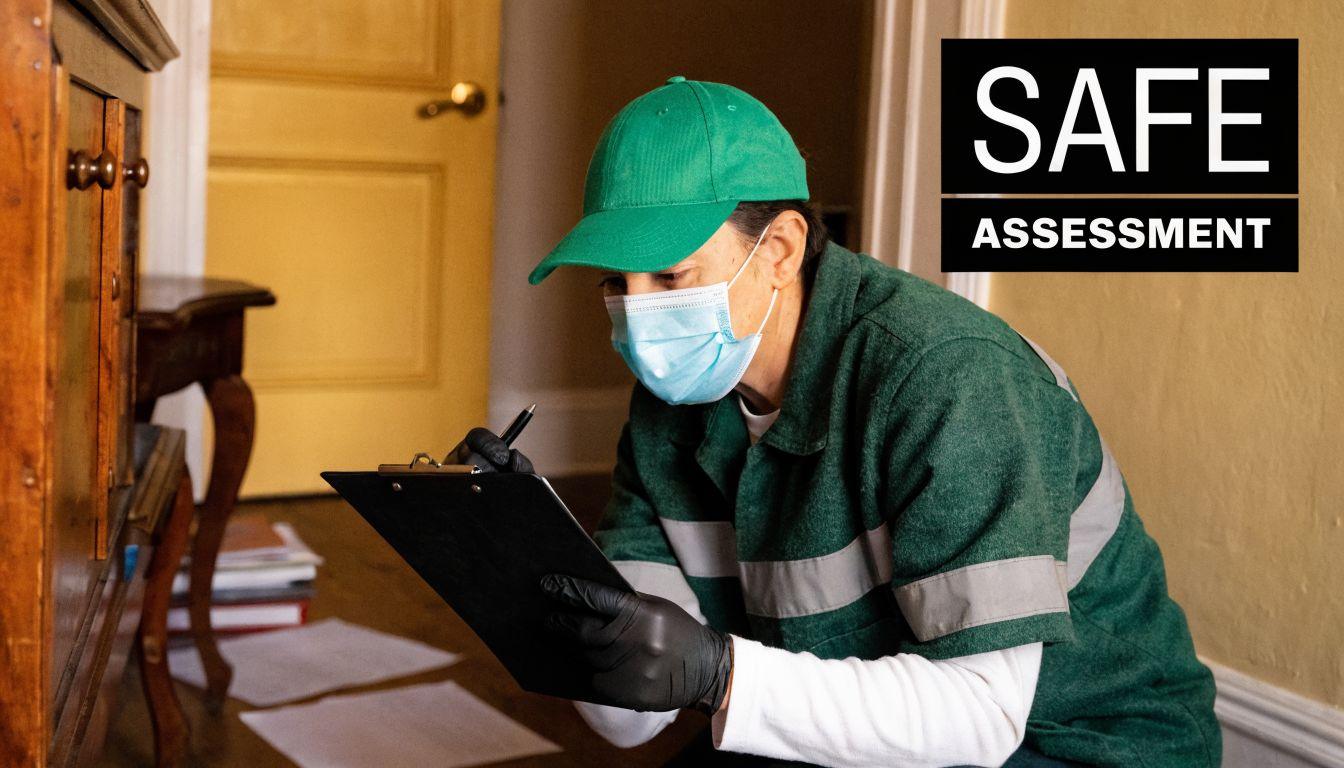
Start with entry safety
Do not walk into a heavily cluttered property casually. In older Miami-Dade and Broward homes, I look for blocked exits, sagging floors, overloaded rooms, strong odor, visible insect activity, staining on ceilings, and signs of long-term moisture before anyone starts opening closets or shifting piles.
Use a basic safety protocol on day one:
- Wear protection: Gloves, closed shoes, eye protection, and a mask are minimum gear.
- Limit the team: Too many people in a tight, unstable house creates more risk.
- Stay near clear paths: Don’t climb over piles or force access into sealed rooms.
- Photograph first: Document room conditions before anything gets moved.
- Check utilities carefully: If there are signs of leaks or exposed wiring, stop and bring in the right professional.
If the property appears unsafe or badly deteriorated, a seller should consider options for selling a severely damaged property without upfront repair money.
Use a three-part triage
A useful first pass is to sort the problem into three buckets.
General clutter
This is the lightest category. Rooms are packed, but you don’t see major contamination or obvious structural failure. A house in this condition may still be a candidate for wholetail if access is possible and the seller has time.
Hazard conditions
This category includes mold, spoiled food, pests, animal droppings, standing water, sharp debris, or foul air quality. Once the property moves into this range, cleanup costs and liability rise fast. At this stage, many families underestimate the scope of work.
If you can’t safely inspect walls, floors, plumbing access points, or electrical panels, you don’t yet know the property’s condition.
Structural or systems damage
This is the category that changes the sales strategy most. Look for soft floors, water intrusion, roof staining, broken windows, damaged drywall, inaccessible bathrooms, non-functioning HVAC, or evidence that parts of the house haven’t been usable for a long time. In South Florida, prolonged moisture often means hidden problems behind surfaces.
A practical field checklist should include:
- Access and egress
- Air quality and odor
- Evidence of water intrusion
- Visible pest activity
- Condition of kitchens and baths
- Whether doors and windows operate
- Whether major systems can even be inspected
- Whether there are city notices, HOA letters, or stacked mail suggesting legal or payment issues
Documenting these conditions early makes later disclosure decisions cleaner. It also keeps families from spending weeks sorting personal items before they’ve even confirmed whether a retail sale is realistic.
The Core Decision Cleanout vs Selling As-Is
This is the point where most sellers lose money by making the wrong kind of effort. They spend on dumpsters, labor, and light renovations before they know whether the house is financeable, insurable, or worth carrying for another quarter.

When wholetail makes sense
A wholetail strategy means you do enough work to make the property presentable without taking on a full renovation. For a hoarder house, that usually means junk removal, deep cleaning, and minor cosmetic work.
A professional cleanout and light prep can cost $15,000 to $40,000, and that route can produce a 15% to 30% higher net sale price than a direct as-is sale, but it usually stretches the timeline to 3 to 6 months and carries budget overrun risk, according to this wholetail analysis for hoarder homes.
That approach can work when all of the following are true:
- The estate has liquidity: You can fund cleanup before sale proceeds arrive.
- The title situation is stable: No probate blockage, major lien surprise, or occupancy conflict.
- The house is functionally salvageable for retail presentation: Not perfect. Just showable.
- You can tolerate a longer holding period: Utilities, taxes, insurance, and HOA obligations continue.
If the house contains family property worth sorting, it helps to use a structured process instead of random room-by-room digging. A practical checklist for preparing for your estate sale can keep sentimental items from getting mixed into disposal loads.
Here’s the critical mistake. Sellers often compare gross price to gross price. They should compare net outcome after time, vendor cost, and risk.
When as-is is the better business decision
An as-is sale is not just for owners who can’t afford cleanup. It’s often the more rational path when the house has too many unknowns. If the property has contamination, inaccessible rooms, code pressure, or family members who can’t coordinate a cleanup, the cleanout itself can become the biggest obstacle.
In those cases, the seller trades price upside for speed, certainty, and a much smaller workload. That’s often the right move, especially when the house is blocking probate, draining carrying costs, or impossible to present to ordinary buyers.
A hoarder house only benefits from cleanup if the cleanup creates a property that the next buyer can actually finance, insure, and inspect.
Sellers weighing the financial side should review a side-by-side discussion of renovating before sale versus selling as-is. The right answer usually comes down to available cash, legal timeline, and whether hidden damage is likely to surface once the contents come out.
Navigating Florida’s 2026 Legal and Financial Maze
A hoarder house in South Florida is rarely just a messy house. It’s often tied to a probate file, unpaid assessments, code notices, insurance trouble, or a title issue that only shows up once the sale is underway.

Disclosures are not optional
Under Florida law, sellers must disclose uninhabitable conditions, and that matters in hoarder houses because clutter often masks mold, pests, leaks, air-quality issues, or unsafe access. A 2023 NAR study noted that 28% of distressed property sales involved undisclosed environmental hazards, with average legal costs exceeding $15,000, according to this discussion of disclosure risk in hoarder house sales.
That doesn’t mean you need a perfect house before sale. It means you need to avoid hiding known material conditions. If a room has visible mold, animal contamination, or severe water damage, treat that as a disclosure issue, not a negotiating tactic.
A practical disclosure file should include:
- Known hazard notes: Mold, pests, leaks, blocked rooms, or sanitation issues
- Municipal paperwork: Code notices, unsafe structure letters, or violation records
- HOA or condo correspondence: Delinquency letters, special assessment notices, or access disputes
- Probate authority documents: If an estate is selling, authority to convey must be clear
Probate insurance and HOA friction in South Florida
Probate adds a layer of delay because the seller may not yet have authority to sign a binding transfer. In Miami-Dade and Broward, that often intersects with inherited houses that have been vacant or semi-vacant for long periods. A delayed estate administration can leave taxes, utilities, association dues, and property condition issues unresolved while the house deteriorates further.
Insurance creates another practical barrier. Traditional financed buyers often need insurability before they can close. A hoarder house with visible deferred maintenance, moisture damage, or blocked access can fail that test long before a buyer reaches the loan table. In older Broward condos and single-family homes, insurers and lenders tend to react badly to inaccessible systems and signs of long-term neglect.
HOA and condo association issues are just as important. In a South Florida condo, the unit may carry unpaid assessments, violation fines, or access restrictions that make retail marketing harder. Title companies can clear many of these issues during closing, but only if they’re identified early.
Clean title matters more than a clean living room when you’re selling a distressed property.
Sellers facing condition-related disclosure questions should review how Florida as-is disclosure rules apply before signing any contract or filling out a seller property form. The legal risk in a hoarder sale usually comes from what was known, ignored, or misrepresented.
Choosing Your Sales Path Cash Buyer vs Agent Listing
Once the property condition and legal picture are clear, the transaction method becomes easier to choose. A hoarder house does not move through the market the same way as a standard suburban listing, especially in Miami-Dade and Broward where inspections, insurance, condo rules, and city compliance can all derail a deal.
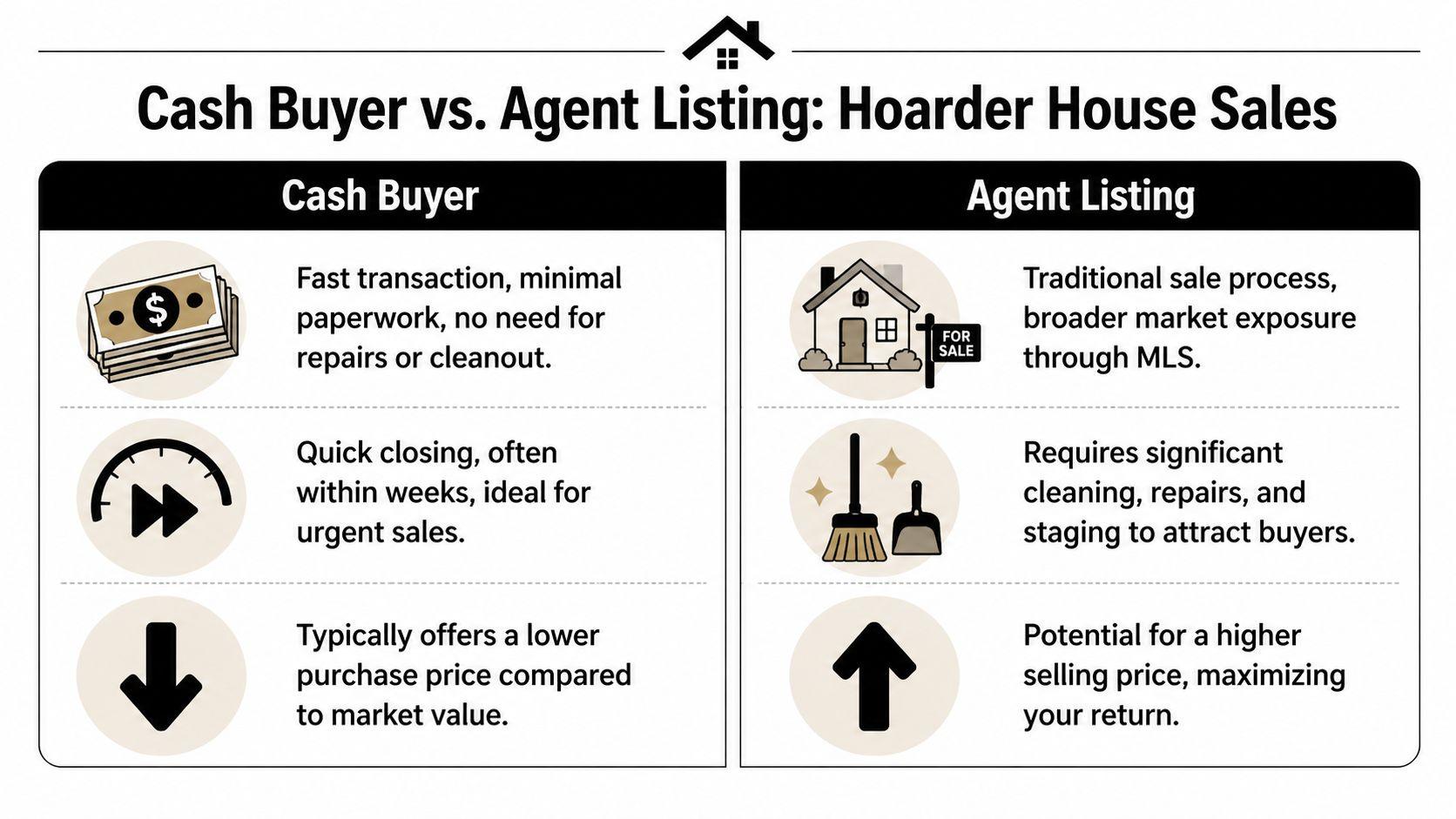
Cash Buyer vs Traditional Agent Listing for a Hoarder House
| Factor | Selling to a Cash Buyer (e.g., Property Nation) | Listing with a Real Estate Agent |
|---|---|---|
| Timeline | Often closes in days or weeks | Often takes longer because prep, showings, inspections, and buyer financing add steps |
| Property condition | Bought in current condition | Usually needs clearing, cleaning, and basic presentation before listing |
| Repairs | Seller typically doesn’t make them | Buyers often request repairs or credits |
| Showings | Limited walkthrough activity | Repeated showings and open-house style access may be needed |
| Offer certainty | Non-contingent structure is common in this space | Financing, inspection, appraisal, and insurance can all interrupt the deal |
| Best fit | Probate, liens, clutter, inherited homes, distressed condition, urgent sale | Sellers with time, funds, and a property that can be prepared for retail |
The cash investor process usually involves a 24-hour assessment, a non-contingent offer at a 20% to 40% discount from market value due to repairs and cleanup, and closing in 7 to 21 days. That timeline is described as 80% to 90% faster than traditional MLS listings for similar properties in this investor process overview.
How the cash sale process works
For owners who need speed, the process is straightforward.
- Submit the property details
The buyer needs the address, current occupancy status, general condition, and any known title or lien issues. - Schedule a walkthrough
This can be brief. The purpose is to inspect access, visible damage, cleanup burden, and resale feasibility. - Review the offer logic
Serious buyers calculate from likely after-repair value, then subtract cleanup cost, repair scope, carrying cost, and transaction risk. That’s why two houses on the same block can produce very different offers if one has blocked rooms, moisture, or legal complications. - Choose a closing date
If the title is clear enough to close quickly, the seller can usually pick a schedule that fits the estate, move-out, or family timeline.
Property Nation is one local option in this category. The company buys Florida houses in current condition, including cluttered properties, with no listing, no cleanout requirement, and seller-selected closing dates.
For sellers who need maximum price and can support the prep work, an agent listing still has a place. For sellers dealing with urgency, contamination, access problems, or inherited distress, the cash route is often the cleaner operational decision.
Finalizing the Sale Timeline and Closing Logistics
A lot of sellers assume the hard part is over once the offer is signed. In South Florida, closing a hoarder house is usually won or lost at title, probate, association estoppels, and access coordination.
What happens after you sign
The title company opens the file and starts pulling the records that matter. That includes municipal liens, unpaid property taxes, code enforcement fines, open permits, HOA or condo balances, probate documents, and any recorded judgments that can block transfer. In Miami-Dade and Broward, those issues are common enough that I treat them as part of the closing plan from day one, not as surprises.
If the sale is a true as-is cash deal, the closing can be fast. The primary variable is not the clutter level. It is whether the seller has clear authority to sign and whether title can be cleared without a court delay, payoff dispute, or association problem.
That distinction matters.
A wholetail sale with minimal cleanup usually takes longer than a direct cash closing because you may need extra time for trash-out, basic access repairs, utility setup, photography, and buyer showings. Sometimes that extra time produces a better net. Sometimes it burns money through holding costs, insurance problems, and failed retail inspections. The right path depends on what is attached to the property, not just what is inside it.
What you need to do before closing
The pre-closing checklist is usually narrower than sellers expect. Focus on what affects legal transfer and what you cannot afford to leave behind.
- Pull personal records first: IDs, banking papers, estate documents, tax files, vehicle titles, passports, and medications should come out early.
- Remove sentimental and high-risk items: Photos, heirlooms, jewelry, firearms, cash, and anything with personal data should not stay in the house until the final walkthrough.
- Respond to title requests quickly: Death certificates, letters of administration, trust documents, payoff statements, and missing signatures cause more delays than debris.
- Gather every access item: Keys, gate remotes, alarm codes, mailbox keys, parking decals, fobs, and storage room keys should be accounted for before the closing day rush.
- Confirm occupancy status in writing: If relatives, tenants, or unauthorized occupants are still inside, get that resolved before closing or make sure the contract clearly assigns that risk.
In many as-is transactions, you do not need to clear every room. You take what matters, disclose what you know, and close based on the agreed condition. For families dealing with probate, out-of-state coordination, or a house that has been uninsurable under current Florida standards, that can be the difference between a sale that closes and one that stalls.
One more South Florida point. If the property is in an HOA or condo association, do not assume the balance shown last month is still the payoff. Estoppels expire, interest keeps running, and some associations will not issue final approval documents until they have current figures. That can affect both timing and your net proceeds, especially in older Broward and Miami-Dade communities with active collection policies.
Frequently Asked Questions About Selling a Hoarder House
Can I sell a hoarder house without cleaning it out first
Yes, if you sell to a buyer that purchases in current condition. That route is common when the house has severe clutter, hidden damage, or legal pressure that makes retail prep unrealistic.
Should I sort every item before I decide how to sell
No. First confirm whether the property is even a realistic candidate for a retail sale. If the house has major hazards or title complications, weeks of sorting may not improve your result.
Sort for documents and sentiment first. Sort for value second.
Can I sell a hoarder house in Miami or Broward if I live out of state
Yes. Out-of-state heirs do this regularly. The key issues are proof of authority, access for walkthroughs, title coordination, and a clear plan for personal items you want removed before closing.
What if there are tenants or unauthorized occupants
That changes the sale strategy. Occupancy affects access, condition verification, and timing. In some cases, a direct buyer is more workable than a retail listing because the property cannot be freely shown.
Is an agent listing always the better way to get more money
Not always. A higher contract price doesn’t automatically mean a higher net. If cleanup, holding costs, failed inspections, insurance trouble, or buyer repair demands stack up, the retail path can produce less than expected.
What is the first practical step
Start with a controlled assessment, gather legal paperwork, and decide whether the house is a cleanup project or a disposal problem attached to real estate. That distinction drives everything that follows.
If you need a practical exit from a cluttered, inherited, damaged, or hard-to-sell property in South Florida, Property Nation offers a direct as-is sale option for homeowners in Miami-Dade and Broward. You can submit the property details, get a cash offer, and choose a closing timeline that fits the situation without listing, repairs, or a full cleanout first.